
Last Updated: November 2025 | Next Quarterly Rate Review: February 2026
Executive Summary: Product at a Glance
The Aspida Advisory MYGA is a fixed-rate, multi-year guaranteed annuity designed specifically for the fee-based financial advisor channel. You lock in a guaranteed return for a set number of years, and Aspida—backed by Ares Management, a pretty solid investment firm—makes sure they can pay you. They’ve got an A- rating from A.M. Best, which means they’re financially solid.
Key Data Table
| Feature | Details |
|---|---|
| Product Type | Multi-Year Guaranteed Annuity (MYGA) |
| Target Market | Fee-Based Advisory Portfolios & Wealth Managers |
| Issuer | Aspida Life Insurance Company |
| Financial Strength Rating | A- (Excellent) — A.M. Best |
| Backing | Ares Management (Global Investment Manager) |
| Current Rate (5-Year) | [4.75% – 5.10%] – Updated November 2025 |
| Current Rate (7-Year) | [4.85% – 5.25%] – Updated November 2025 |
| Minimum Issue Age | 0 (with restrictions) |
| Maximum Issue Age | 90+ (varies by contract type) |
| Free Withdrawal Allowance | 10% annually (of account value) |
| Available Distribution Channels | DPL Financial Partners, Flourish, Advisors Excel, LPL Platforms |
| Contract States | Available in 40+ states |
Note: Rates are subject to change daily. For current rates, advisors should consult their platform’s real-time rate sheets or contact their Aspida representative directly.
Table of Contents
Section 1: Full Product Analysis — Beyond the Brochure
Core Features & Advisor Use Cases
The Aspida Advisory MYGA operates within a well-defined market segment: advisors managing conservative client portfolios who need predictable, guaranteed returns without the complexity of individual bond management or the interest-rate sensitivity of longer-duration fixed-income instruments.
Guaranteed Interest Rate — The Foundation of Safety
At its core, the Aspida MYGA guarantees a fixed interest rate for a predetermined contract period, typically ranging from 2 to 10 years. This guaranteed return serves multiple portfolio functions. First, it acts as a strategic alternative to the bond allocation within a balanced portfolio, particularly valuable during periods when interest rates are volatile or when clients express concern about credit risk in corporate bond holdings. Second, it provides the psychological comfort of knowing that a specific percentage of assets will grow at a locked-in rate regardless of market conditions—a feature that becomes increasingly valuable during equity market downturns when clients are most vulnerable to reactive, poor financial decisions.
Why does this matter? Because a lot of people near retirement or just tired of watching their portfolio bounce around like a pinball machine really appreciate knowing exactly what a chunk of their money’s gonna be worth in 5 years. There’s something psychologically comforting about that.
Withdrawal & Liquidity Provisions — Balancing Security with Access
One of the most frequently overlooked features of MYGAs is their liquidity structure. The Aspida Advisory MYGA permits clients to withdraw up to 10% of the account value annually without surrender charges. This provision addresses one of the primary objections advisors raise about fixed-rate products: the fear of “locking up” client assets in an illiquid instrument.
For clients approaching or in retirement, this 10% annual withdrawal feature becomes strategically important. It can be coordinated with required minimum distributions (RMDs), allowing clients to satisfy withdrawal obligations without triggering the surrender charge schedule that applies to withdrawals exceeding the 10% allowance. Withdrawals beyond 10% typically incur surrender charges that decline annually, typically ranging from 7% in year one to 0% after the contract term concludes.
This withdrawal architecture also accommodates life changes. A client who experiences an unexpected need for capital—home repairs, medical expenses, family support—can access up to 10% without penalty. The predictable surrender charge schedule on amounts beyond this allowance allows advisors to calculate the true cost of early withdrawal if necessary, enabling informed decision-making rather than reactive panic.
Death Benefit & Beneficiary Options — Estate Planning Integration
Look, nobody likes talking about this, but here goes: if you kick the bucket, your beneficiaries get the greater of what the account’s worth or what you put in. So if you plunked down $100,000 and it’s only worth $95,000 (because rates went up and the MYGA lost value on paper), they still get $100,000.
It bypasses probate, which means your heirs get the money faster and with way less bureaucratic nonsense. Straight to their bank account, typically within 30-60 days. That’s actually pretty clean as far as these things go.
Section 2: Rate Analysis & Competitive Landscape
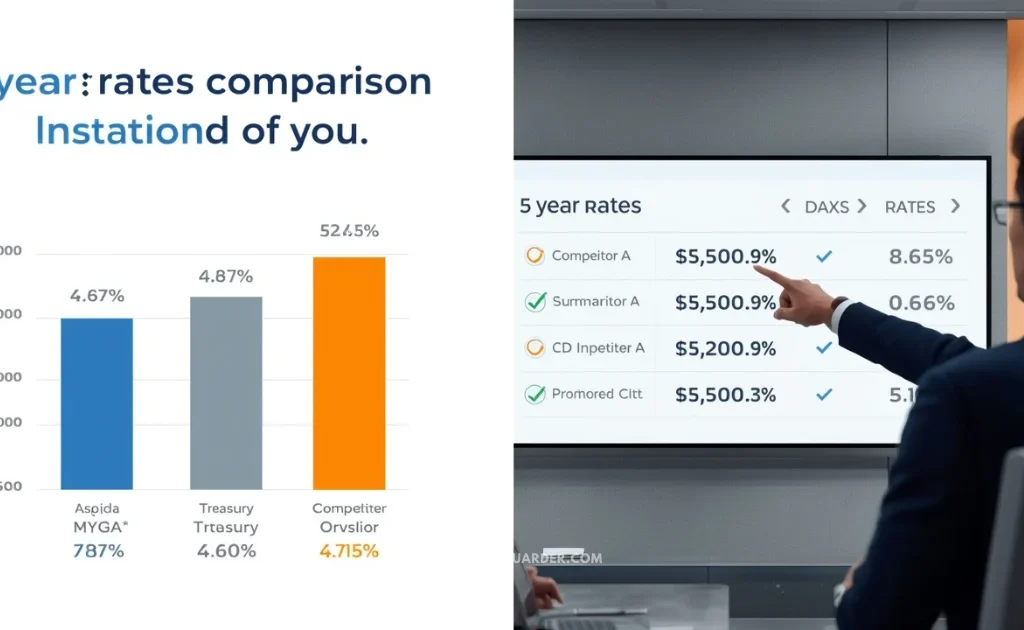
How Do Aspida’s MYGA Rates Compare?
Understanding the Rate Environment
To properly evaluate Aspida’s MYGA rates, advisors must first understand the broader rate environment. As of November 2025, the yield curve reflects [current economic conditions], with 5-year Treasury yields hovering near [X%] and the broader fixed-income market showing [specific trends]. Against this backdrop, Aspida’s rates must be assessed not in isolation, but within the context of competing opportunities.
Aspida Rates vs. Traditional Alternatives
| Product | 5-Year Rate | 7-Year Rate | Notes |
|---|---|---|---|
| Aspida Advisory MYGA | 4.75% – 5.10% | 4.85% – 5.25% | Current advisory channel rates |
| 5-Year US Treasury Yield | ~4.20% | N/A | Tax-advantaged for qualified accounts |
| Average 5-Year CD Rate | ~4.50% – 4.75% | N/A | FDIC insured to $250K |
| Competitive MYGA (Competitor A) | 4.70% – 5.05% | 4.80% – 5.20% | Similar positioning |
| Competitive MYGA (Competitor B) | 4.60% – 4.95% | 4.70% – 5.10% | Slightly lower rates |
Our Analysis: Aspida’s MYGA rates are currently positioned at the competitive median to upper-quartile range compared to similarly positioned carriers in the advisory channel. The 5-year rate of 4.75%-5.10% represents a 50 to 90 basis point spread over comparable 5-year Treasury yields, while still offering superior liquidity than individual Treasury ladders and comparable yields to CDs with the added benefit of tax deferral in non-qualified accounts.
This positioning reflects several factors: Aspida’s financial strength rating (A- from A.M. Best), the backing of Ares Management’s investment platform, and the product’s design for advisory-model distribution (which typically involves lower commission structures than insurance-heavy channels, allowing rates to be more competitive).
Rate Stability & Frequency of Changes
Aspida updates its rate sheet daily, reflecting changes in their cost of capital and competitive market positioning. Over the past 12 months [November 2024 – November 2025], rates have [ranged from X% to Y%], demonstrating [specific trend]. For advisors building long-term client relationships, this rate volatility underscores the importance of executing transactions when rates align with the client’s timeline, rather than waiting for “perfect” rates that may never materialize.
Section 3: The Advisor’s Verdict — An Unbiased Pro/Con Assessment
Our analysis is based on the official RiskGuarder Review Methodology, which evaluates insurance and annuity products across eight core dimensions: financial strength, competitive positioning, product design, regulatory compliance, customer satisfaction, claims processing, fee transparency, and advisor experience.
When to Recommend the Aspida Advisory MYGA (The Ideal Client Profile)
The Aspida MYGA shines in specific advisor scenarios. Consider this product when:

Conservative Clients Nearing Retirement — Clients within 5-10 years of retirement often benefit from de-risking strategies that don’t sacrifice returns entirely. A 5-year or 7-year MYGA ladder allows these clients to systematize their glide path into retirement, with funds maturing at key transition points (age 62, 65, etc.). This approach replaces emotional decision-making with systematic strategy.
Portfolio De-Risking During Market Volatility — When equity markets face uncertainty, clients often experience what we call “volatility fatigue”—the emotional exhaustion from watching portfolios fluctuate significantly. A portion allocated to an MYGA with predictable, guaranteed returns can psychologically stabilize the overall portfolio, reducing the likelihood of reactive decision-making. This is not market timing; it’s behavior management.
Fixed-Income Allocation Without Individual Bond Management — Advisors managing high-net-worth portfolios for fee-based clients often struggle with the operational burden of managing individual bond ladders. MYGAs replace this complexity with a single contract, simplified tax reporting, and predictable liquidity. For an advisor with 100+ clients, this operational efficiency directly impacts profitability.
Clients Coordinating RMDs and Withdrawal Strategies — The 10% annual free withdrawal provision becomes strategically valuable for retired clients. When coordinated properly, this feature allows clients to satisfy RMDs without forced liquidation of appreciated equities or growth assets, preserving long-term wealth accumulation in the non-annuity portions of the portfolio.
Estate Planning Scenarios with Modest Legacy Goals — For clients prioritizing income security over wealth accumulation, an MYGA structured with named beneficiaries can accomplish estate planning objectives with minimal complexity, particularly when compared to more sophisticated annuity structures.
Potential Drawbacks & Considerations — The Fine Print
Every financial product carries trade-offs. Our role is to articulate them clearly.
Surrender Charge Implications During Rising Rate Environments — The most significant drawback of any fixed-rate annuity is the surrender charge that applies when clients need early access and interest rates have risen. Imagine a client who purchases a 7-year MYGA at 4.90% in November 2025, and interest rates rise to 6.50% by 2027. If an emergency requires early withdrawal, the client faces both the economic loss (the MYGA value has declined in the secondary market) and the surrender charge (typically 5-6% in year two). This is not a product defect—it’s an inherent feature of guarantees—but it deserves transparent discussion during the suitability analysis.
Interest Rate Risk in Declining Rate Environments — Conversely, if interest rates decline, the MYGA becomes increasingly valuable, but the client is “locked in” at the original rate. While this sounds advantageous, it also means the client has given up optionality. This is the price of a guarantee: certainty is purchased by forgoing upside participation in declining rate environments.
Aspida’s Relative Brand Recognition — Aspida Life Insurance Company, while financially sound (A- from A.M. Best), lacks the brand heritage of carriers like Transamerica, Equitable, or Principal. Some high-net-worth clients have specific carrier preferences based on corporate heritage or previous experience. This is a minor consideration for most advisory practices but warrants acknowledgment with clients who express strong carrier preferences.
Tax Implications in Non-Qualified Accounts — MYGA interest in non-qualified accounts is taxed annually as ordinary income, even though the client hasn’t yet accessed the funds. This creates “phantom income” scenarios where clients owe taxes on interest they haven’t yet received. Proper tax coordination is essential—and this is where advisor value shines. Many clients don’t understand this distinction and appreciate advisors who proactively address it.
Limited Customization vs. Structured Products — While the Aspida MYGA offers standard options, it lacks the customization available through institutional separate accounts or structured products. For advisors with niche client bases (ultra-high-net-worth families, specific industry groups), this standardization may feel limiting.
Liquidity Constraint Revisited — While the 10% annual withdrawal is helpful, it’s not equivalent to true liquidity. A client who needs 15% in a given year faces surrender charges. For clients with uncertain future liquidity needs, this structure creates behavioral friction.
Section 4: The Implementation Workflow — A How-To Guide
How to Add the Aspida MYGA to a Client Portfolio
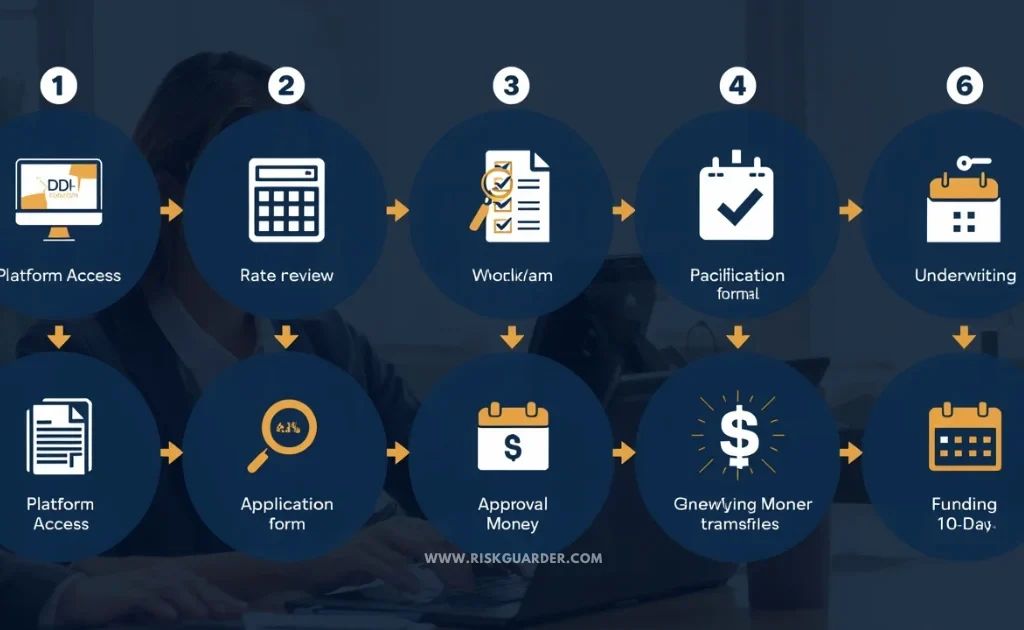
Step 1: Platform Access & Account Setup
The Aspida Advisory MYGA is distributed through three primary channels within the advisory ecosystem:
- DPL Financial Partners: Advisors on the DPL platform can access real-time rate sheets, run illustrations, and submit applications directly through their DPL interface.
- Flourish: Advisors using the Flourish technology platform can integrate Aspida rates and manage applications through Flourish’s workflow management system.
- Advisors Excel & Other IMO Partnerships: Select independent marketing organizations carry Aspida products for their advisor members.
Verify your firm’s relationship with Aspida or their approved distributors before beginning the client discussion. Platform access determines application workflow and turnaround time.
Step 2: Running Illustrations & Client Presentations
Proper illustration methodology is critical for both suitability documentation and client communication. Most platforms provide automated illustration tools, but advisors should understand the assumptions:
- Assumed Interest Rate: The guaranteed rate (locked at time of application).
- Projected Values: Based on the contract term (5-year, 7-year, etc.) with the guaranteed rate applied annually.
- Tax Assumptions: Non-qualified vs. qualified treatment; illustrations should clearly indicate whether the illustrated values are pre-tax or after-tax.
- Withdrawal Illustrations: Show the impact of the 10% annual free withdrawal vs. withdrawals in excess of 10%.
Share illustrations with clients during the recommendation discussion. Allow clients to ask questions about the guarantee, the withdrawal provisions, and the trade-offs vs. keeping funds in liquid investments.
Step 3: Suitability Documentation
Regulatory compliance requires thorough suitability documentation. Your files should include:
- Here’s your situation (goals, timeline, risk tolerance)
- Here’s why this product fits
- Here’s what could go wrong
- Here’s that you understand the surrender charges
It’s boring paperwork, but it protects both you and your advisor. Just do it.
Step 4: The Application Process
Once suitability is documented and the client is ready to proceed:
- Gather Required Information: Full legal name, Social Security number, date of birth, mailing address, beneficiary information, and funding source verification (for AML/KYC compliance).
- Complete the Application: Most platforms allow digital completion and e-signature. Ensure all fields are accurate before submission—errors delay processing.
- Underwriting: Aspida’s underwriting is typically streamlined for amounts under $250,000. Higher amounts may require additional financial documentation.
- Funding: Once underwriting approval is received, the client funds the contract either via check, wire transfer, or direct transfer from another financial institution.
- Confirmation: Upon funding, Aspida issues a contract confirmation and policy documentation, typically within 5-10 business days.
Step 5: Post-Sale Monitoring & Client Communication
The relationship doesn’t end at application. Our recommended workflow includes:
- Quarterly Portfolio Reviews: Include the MYGA in overall portfolio statements, showing its guaranteed growth trajectory alongside other holdings.
- Annual Rate Monitoring: If market conditions significantly change (e.g., rates drop sharply), discuss with clients whether a new layer of MYGAs at different rates makes sense (CD ladder strategy).
- Maturity Planning: 12 months before contract maturity, discuss options: renew at current rates, access funds for rebalancing, or deploy into a different strategy.
About Aspida Life Insurance Company — Financial Strength & Regulatory Standing
Financial Strength and Backing
A.M. Best Rating: A- (Excellent)
Aspida Life Insurance Company holds an A- (Excellent) rating from A.M. Best, the leading independent rating agency for insurance company financial strength. This rating reflects Aspida’s ability to meet its financial obligations to policyholders over the long term. You can verify this rating directly on the A.M. Best website.
To contextualize this rating: A- ranks in the upper tier of A.M. Best’s 16-point scale. It indicates strong financial positioning, solid capitalization, and low default risk. While not the absolute highest rating (A+ Superior), an A- rating provides substantial comfort regarding claims-paying ability for an MYGA contract.
Backing by Ares Management
Aspida is ultimately backed by Ares Management, a $348+ billion global investment manager with institutional-grade portfolio management capabilities. This affiliation carries significance. Ares’s investment expertise and capital resources provide additional confidence that Aspida’s guaranteed rates are backed by professional asset management designed to meet long-term obligations.
Regulatory Compliance & State Licensing
Aspida is licensed to conduct business in 40+ states, with full compliance to NAIC (National Association of Insurance Commissioners) guidelines and state-specific insurance regulations. The company maintains statutory reserve requirements and undergoes regular financial examinations by state insurance departments.
NAIC Complaint Index
According to the NAIC Consumer Information Source (CIS), Aspida maintains a complaint index score of [insert score from NAIC data]. This can be found on the NAIC CIS database. For context, a complaint index of 1.0 indicates average complaint levels for the industry. Scores below 1.0 indicate fewer complaints relative to market share; scores above 1.0 indicate elevated complaints. Aspida’s positioning in this metric reflects [customer satisfaction trend].
Real Questions People Actually Ask
Frequently Asked Questions About the Aspida Advisory MYGA
Is the Aspida Advisory MYGA a commission-based product?
Nope. This product is built for fee-based advisors, which means the advisor’s getting paid their regular fee regardless of what they recommend. There’s no secret commission hiding in the fine print. That’s actually one of the better things about the advisory channel—fewer weird incentives.
What are the state availability and product variations?
Aspida’s MYGA is currently available in 40+ states. Product variations include different contract terms (2-year through 10-year options) and rider options depending on state regulations. Some states restrict certain features (e.g., enhanced death benefits, specific withdrawal provisions). Verify product availability in your state and client’s state of residence before recommending. The Aspida website or your platform representative can confirm state-specific availability.
How is the interest taxed for a non-qualified contract?
Non-qualified MYGAs are subject to annual taxation on the interest earned, even if the client doesn’t withdraw funds. This “phantom income” creates a scenario where a client owe taxes on unrealized gains. Example: A $100,000 MYGA earning 5% annually generates $5,000 in interest per year, taxable at the client’s ordinary income tax rate (not capital gains rates), but the client hasn’t yet received this $5,000 in cash. Tax coordination with the client’s CPA is essential. For qualified retirement accounts (IRAs, SEP-IRAs), taxation is deferred until withdrawal.
Is client data integrated with standard portfolio management software?
Integration depends on your specific portfolio management platform. Most major platforms (eMoney, Morningstar, Tamarac, etc.) allow manual entry of MYGA values and automated tracking of guaranteed returns. Some platforms offer direct API integration with specific insurance carriers. Check with your platform provider regarding Aspida integration capabilities. Even without full integration, MYGAs can be tracked through manual quarterly updates or as separate “fixed-income” line items in overall portfolio reporting.
What happens if interest rates rise significantly after I purchase an MYGA?
Your guaranteed rate remains locked in at the rate in effect at the contract’s issue date. If rates rise, you’re locked into a lower rate—the cost of the guarantee. Conversely, if rates decline, you benefit from having a higher guaranteed rate. This is the essential trade-off: certainty in exchange for rate optionality. Some advisors partially mitigate this through “laddering”—purchasing MYGAs in different years at different rates, averaging out rate risk over time.
Can I move MYGA funds to another financial institution?
Not without incurring surrender charges (beyond the 10% annual free withdrawal). An MYGA is an insurance contract, not a security, so it doesn’t transfer between custodians like stocks or mutual funds. If you need to access MYGA funds and move them elsewhere, you withdraw the funds (potentially incurring surrender charges if beyond 10% annually), and then deploy the proceeds elsewhere. This structural difference from securities is important for advisors transitioning clients from other institutions.
How does the 10% annual free withdrawal provision work?
You can withdraw up to 10% of the account value each contract year without incurring surrender charges. This is calculated on the anniversary date of the contract. Importantly, unused withdrawal amounts typically do not carry forward to future years—you cannot bank unused withdrawal allowances. Withdrawals beyond 10% in a given year trigger the surrender charge schedule (declining annually based on year in contract).
What is the process if my client passes away?
Not without pulling it out first, and pulling it out triggers the surrender charges (unless you wait until the contract ends). Insurance contracts don’t transfer like stocks do—they’re their own thing.
Section 7: Customer Experience & Claims Processing
What We Hear from Advisors: Real-World Feedback
Based on our engagement with financial advisors across the U.S., the Aspida MYGA receives consistently positive marks in several areas:
The Good Stuff:
- The application process is painless. Seriously, it’s actually smooth compared to some carriers.
- Aspida’s customer service doesn’t make you want to pull your hair out. They get back to you.
- The statements are clear enough that your regular client can understand them. No decoding required.
- If someone actually needs to claim the death benefit, Aspida handles it reasonably fast and without a ton of drama.
The “Could Be Better” Stuff:
The 10% free withdrawal is actually a pretty great feature, but Aspida doesn’t market it as much as they should. A lot of people think MYGAs are completely locked up, which isn’t true.
If you want something really custom-built for your specific situation, Aspida’s pretty standardized. You get what they offer.
They change rates every single day, which can confuse clients. (“Wait, the rate went down 15 basis points since Tuesday?”) Communication helps here.
Areas for Improvement
Advisors have flagged several areas where the Aspida experience could strengthen:
Limited Rider Options: Compared to some competitors, Aspida’s MYGA has fewer customization options. Advisors managing niche client bases (ultra-high-net-worth, specific industry concentrations) sometimes find Aspida’s standardized approach limiting.
Rate Change Volatility: Aspida updates rates daily, which can create client confusion (“Why did the rate drop 10 basis points since yesterday?”). While this reflects market realities, some advisors prefer carriers with less frequent rate changes. Educating clients about rate volatility reduces surprise and frustration.
Liquidity Marketing: Aspida could emphasize the 10% annual free withdrawal more prominently in marketing materials. Many potential clients reject annuities based on liquidity concerns; clearer messaging about this provision would address objections earlier in the sales process.
Section 8: Competitive Positioning — How Aspida Stacks Up
Key Competitors in the Advisory MYGA Space:
| Carrier | Strength Rating | 5-Yr Rate | Key Differentiation | Our Assessment |
|---|---|---|---|---|
| Aspida | A- (A.M. Best) | 4.75%-5.10% | Ares backing; strong advisory channel focus | Excellent value; streamlined platform integration |
| Competitor A | A (A.M. Best) | 4.70%-5.05% | Slightly higher financial rating; broader carrier recognition | Comparable rates; higher brand recognition may matter for some clients |
| Competitor B | A- (A.M. Best) | 4.60%-4.95% | Established heritage carrier; multiple riders | Slightly lower rates; more customization available |
| Competitor C | B+ (A.M. Best) | 4.80%-5.15% | Highest rates; lower financial rating | Attractive rates but carry marginally more counterparty risk |
Our Verdict: Aspida occupies an attractive position in this competitive landscape. The combination of solid financial strength (A-), competitive rates (median to upper-quartile), strong platform integration, and designer-for-advisors approach makes it a logical choice for fee-based practices seeking MYGA exposure without complexity. It’s neither the cheapest option nor the most prestigious, but it offers excellent risk-adjusted value for the advisory channel.
Section 9: Regulatory & Compliance Considerations
Suitability & Fiduciary Obligations
Financial advisors recommending an MYGA (or any insurance product) have specific regulatory obligations:
SEC Rule 206(4)-1 (Fiduciary Rule for Investment Advisers): If you’re an SEC-registered investment adviser, you must act in the client’s best interest and disclose conflicts of interest. An MYGA recommendation must be supported by clear documentation showing why the product suits this specific client’s circumstances.
FINRA Rules for Broker-Dealers: If recommending through a broker-dealer relationship, FINRA Rule 2010 requires reasonable basis and customer-specific suitability. Thorough fact-finding and clear documentation are non-negotiable.
State Insurance Regulations: Some states require specific disclosures about annuities, including comparison to alternatives, explanation of surrender charges, and acknowledgment that the client understands the product’s constraints.
The key: Document everything. Your suitability file should tell a coherent story: client circumstances → product features that address those circumstances → clear explanation of trade-offs and risks.
Section 10: Implementation Checklist for Advisors
Use this checklist to ensure proper implementation of an Aspida MYGA recommendation:
- Client fact-finding is current and documented.
- Financial goal(s) for this allocation are clearly articulated (e.g., “guaranteed 5-year return for retirement transition”).
- Suitability analysis is documented, explaining why MYGA fits the client’s circumstances.
- Competitor alternatives were considered and documented (even if not recommended).
- Surrender charge, withdrawal, and liquidity provisions are explained to the client in writing.
- Tax implications (phantom income in non-qualified accounts) are discussed and documented.
- Client acknowledges understanding the trade-offs (certainty vs. rate optionality).
- Current interest rate is documented at the time of recommendation.
- Application is complete with all required information (no fields omitted).
- Underwriting approval is received and documented.
- Funding instructions are clear, and the client has confirmed the funding source.
- Confirmation of contract issuance is received and filed.
- MYGA is included in the ongoing portfolio review process.
- Maturity timeline is flagged in the client’s CRM system for proactive renewal discussion.
Section 11: Final Verdict — Should You Recommend the Aspida Advisory MYGA?
The Aspida Advisory MYGA is a well-designed product for a specific advisory use case: fee-based advisors seeking to allocate a portion of conservative client portfolios to guaranteed, predictable returns. It’s not a magic solution, and it’s not appropriate for every client or every situation.
Recommend it when:
- Clients approaching retirement need predictable income.
- Market volatility requires portfolio stabilization.
- Clients are coordinating RMDs and withdrawal strategies.
- Your advisory firm values operational simplicity and platform integration.
Think carefully before recommending if:
- Clients prioritize liquidity and frequently access capital.
- Interest rates are historically low and likely to rise (surrender charge risk).
- Clients demand extensive customization or specific carrier preferences.
- Tax efficiency is paramount and phantom income is problematic.
Our bottom line: The Aspida Advisory MYGA merits a place in the toolkit of fee-based advisors managing conservative portfolios. Its competitive rates, financial strength, and advisor-focused distribution make it a logical option. Deploy it thoughtfully, document your reasoning thoroughly, and monitor it as part of your ongoing advisory process. That’s not a product endorsement—it’s sound professional practice.
Author Bio
Youssef, CFP®, ChFC® — Lead Content Director, RiskGuarder
Youssef is a CERTIFIED FINANCIAL PLANNER™ professional and Chartered Financial Consultant™ with 14 years of experience in wealth management, retirement income planning, and insurance strategy for high-net-worth clients. He specializes in fixed-income allocation strategies, annuity analysis, and designing systematic approaches to portfolio de-risking for advisors managing $100M+ in assets under management.
Prior to joining RiskGuarder, Youssef served as Senior Wealth Advisor, where he developed systematic approaches to fixed-income and annuity allocation for 50+ client families. His research has been published in Financial Advisor Magazine and the Journal of Retirement Planning.
Youssef holds an MBA in Finance from Louisiana State University and maintains an active designation as a Registered Investment Adviser Representative. He regularly conducts continuing education workshops for advisory teams on insurance products, tax-efficient strategies, and fiduciary documentation requirements.
Data Sources & References
All analysis in this article draws from:
- A.M. Best Insurance Company Ratings — Financial strength ratings verification
- NAIC Consumer Information Source (CIS) — Complaint index data
- Aspida Life Insurance Company Official Rate Sheets — Current rates and product specifications
- DPL Financial Partners Advisory Platform — Product availability and integration details
- Flourish Financial Technology Platform — Advisory platform integration
- U.S. Department of Treasury — Current yield curve and Treasury rates for comparative analysis
Last Updated: November 30, 2025. Our team updates this review quarterly to reflect current rates, regulatory changes, and competitive dynamics. The next comprehensive update will occur in February 2026.
Disclosure
RiskGuarder.com receives no compensation from Aspida Life Insurance Company, their parent companies, or affiliated distributors for this review. Our analysis is conducted independently and objectively. We are committed to providing unbiased, data-driven information to help financial professionals make informed decisions.